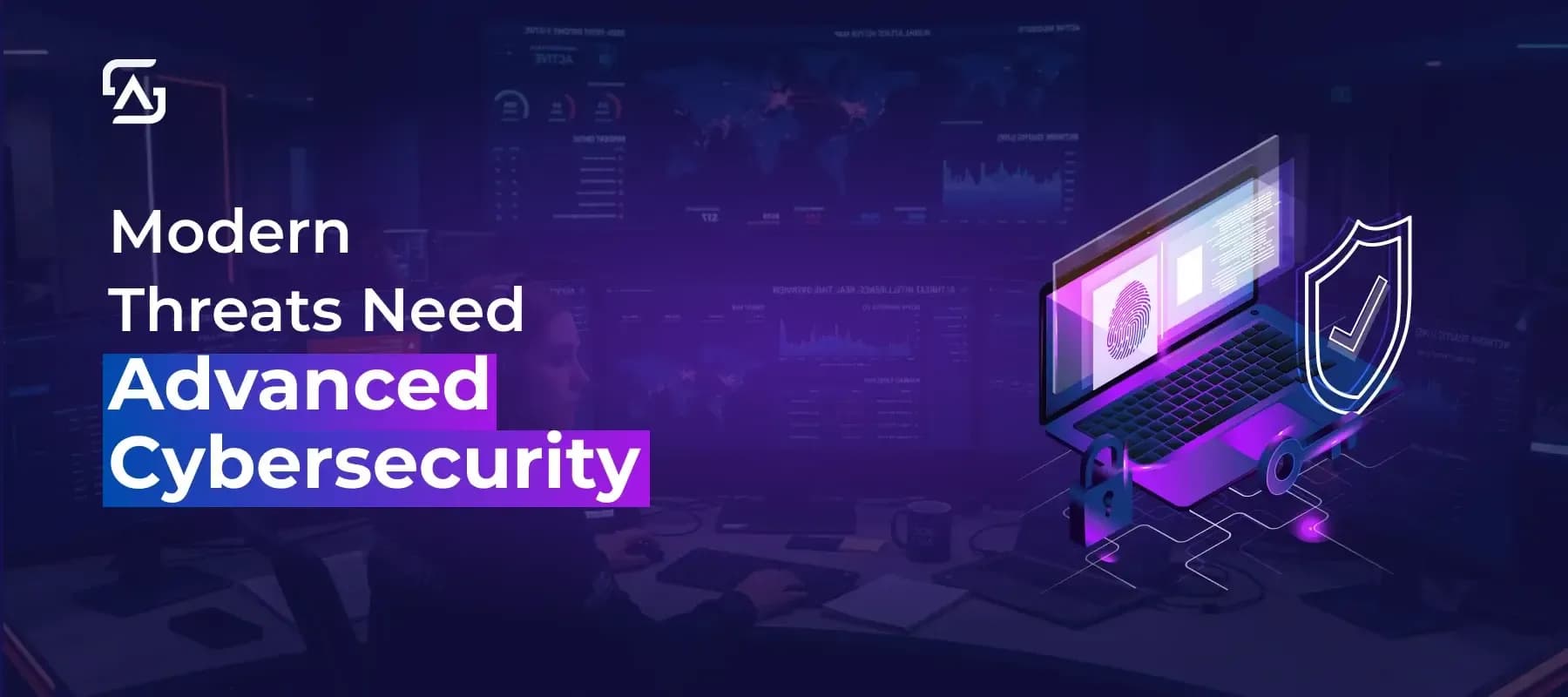
Why Traditional Cybersecurity Isn’t Enough in 2026 has become a pressing question for US enterprises. Between 2020 and 2026, the cybersecurity risks for businesses have expanded dramatically. Hybrid work, cloud adoption, and a proliferation of connected devices have increased attack surfaces far beyond corporate perimeters. Legacy defenses; firewalls, signature-based antivirus, and manual audits were designed for a slower, predictable threat environment. Today, these measures cannot keep up with AI-powered attacks, credential theft, and supply chain intrusions.
Modern enterprises are responding with next-gen cybersecurity solutions. AI-enhanced detection & predictive security, zero-trust architectures, and secure-by-design engineering allow organizations to anticipate threats, monitor identities continuously, and respond automatically. Humans now work alongside AI to manage incidents in real-time, ensuring operational resilience and regulatory compliance.
This article explores the evolution of threats from 2020 to 2026, why legacy cybersecurity frameworks fail, and the modern strategies US enterprises must adopt to defend sensitive data, maintain continuity, and thrive in an increasingly hostile cyber environment.
Defining Traditional Cybersecurity - What It Used to Be
Until 2020, US enterprises relied on perimeter-centric defences: firewalls, signature-based antivirus, intrusion detection systems, and periodic audits. These controls assumed employees worked on-site, applications were hosted on internal servers, and endpoints were within corporate networks. Threats were slower, attacks were predictable, and breaches often required repeated effort. Security was reactive, alerts were investigated post-incident, and containment was the primary focus.
By 2026, these assumptions no longer hold. Hybrid IT environments; cloud services, SaaS apps, remote endpoints, and IoT devices have expanded the attack surface beyond traditional perimeters. Misconfigured cloud storage, unsegmented remote devices, or compromised third-party systems can bypass legacy defences entirely.
Operational requirements now demand near-real-time detection: SLAs for incident response, compliance obligations under CCPA and HIPAA, and business continuity plans that cannot tolerate prolonged downtime. Traditional cybersecurity services lack the speed, visibility, and adaptability to meet these demands. Static signature-based systems cannot detect polymorphic malware, AI-driven phishing, or lateral movement across hybrid networks.
Legacy cybersecurity frameworks, while once effective, are inadequate for 2026.Without identity-centric monitoring, AI-enhanced detection, and automated threat response, legacy tools leave sensitive data exposed and operational risk unmitigated. What once protected the enterprise is now insufficient for the complex, high-speed threat environment of 2026.
2026 Threat Landscape - How Attackers Have Evolved
The threat environment for US enterprises has transformed dramatically between 2020 and 2026. Attackers now operate faster, smarter, and at scale, exploiting the hybrid IT infrastructures and cloud-heavy environments that businesses have adopted.
AI‑Powered and Automated Attacks
Attackers in 2026 are leveraging automation and AI not just for scale, but for precision. Rather than deploying traditional malware and waiting for lateral movement, modern threat actors increasingly target cloud identity systems, token validation processes, and authentication trust relationships, such as those used in Microsoft 365, to gain direct access to enterprise environments.
A clear example of automated, identity-focused intrusion was the 2023 Microsoft Storm-0558 incident, where attackers forged authentication tokens to access enterprise email accounts across multiple US organisations. The breach did not rely on traditional malware deployment; instead, it exploited cloud identity trust mechanisms, demonstrating how automation and token manipulation can bypass perimeter-based defences.
Deepfake Social Engineering & Personalised Attacks
AI has transformed social engineering into a far more dangerous threat vector. In recent reports, 85% of IT leaders at mid-to-large organisations said their firms faced deepfake impersonation attacks where attackers used convincing voice or video content to manipulate finance or HR teams into taking harmful actions. These attacks have already led to significant financial and operational losses when employees were tricked into approving sensitive requests.
Identity and Credential Theft as Core Threat Vectors
By 2026, credential compromise has overtaken network-based attacks as the leading threat for US enterprises. Attackers increasingly target cloud identities, SaaS platforms, and enterprise applications, using stolen credentials to move laterally, escalate privileges, and exfiltrate sensitive data They do it all while bypassing traditional cybersecurity defenses.
A clear example is the Okta 2022 third-party credential compromise, where attackers exploited a subcontracted support engineer’s account. They accessed authentication session logs, enumerated Single Sign-On (SSO) configurations, and potentially gained entry to multiple customer environments. No malware was deployed; the attack leveraged trusted identity pathways, demonstrating why traditional cybersecurity fails in 2026.
Post-incident analysis revealed that without real-time SSO monitoring, identity-centric security, robust MFA, token validation, and anomaly detection, enterprise systems remain vulnerable for weeks. This underscores the operational necessity for next-gen cybersecurity solutions that combine AI-enhanced detection, automated responses, and proactive identity monitoring to protect sensitive data, maintain compliance, and mitigate modern credential-based risks.
Supply Chain and State‑Sponsored Threats
Supply chain and state-sponsored attacks have emerged as a critical risk for US enterprises, exploiting trusted vendors and software pipelines to bypass traditional defenses.
A key example is the SolarWinds compromise, where attackers injected the SUNBURST backdoor into digitally signed Orion software updates. These updates reached up to 18,000 customers, including federal agencies and major corporations. The backdoor provided persistent, undetected access for months, blending with normal network activity and evading legacy security tools.
Unlike direct network breaches, these exploits rely on trusted update channels. Attackers could harvest credentials, pivot to cloud assets, and remain unnoticed for extended periods, exposing the limitations of conventional defenses. Operationally, incident response SLAs can be strained, compliance under CCPA and HIPAA is at risk, and business continuity planning must account for third-party exposure. Mitigation requires next-gen cybersecurity solutions: identity-centric security, continuous supply chain monitoring, and AI-enhanced detection across internal and vendor systems.
Hybrid Work and Expanded Attack Surface
The expansion of hybrid workforces has transformed how attackers approach US enterprise networks. Remote access, personal devices, and cloud-hosted applications have multiplied potential attack vectors beyond traditional firewalls and VPNs. Each unmanaged endpoint, home network, or SaaS integration becomes a potential foothold for lateral movement, credential harvesting, and data exfiltration.
Research by Insider Risk Index show attackers exploit unpatched home devices and misconfigured cloud services to escalate privileges, often bypassing endpoint detection systems entirely. Unlike centralized offices, hybrid environments complicate real-time monitoring, leaving breaches unnoticed for hours or days and increasing the likelihood of SLA violations and CCPA/HIPAA non-compliance.
To mitigate these risks, enterprises are adopting continuous endpoint telemetry, context-aware identity verification, and AI-driven anomaly correlation that evaluates activity across devices, networks, and cloud workloads. Automated threat response combined with adaptive access policies ensures that compromised endpoints are isolated immediately, protecting sensitive data while maintaining operational continuity in a dispersed workforce.
Why Traditional Cybersecurity Fails in 2026
Legacy perimeter defenses and signature-based tools are no longer sufficient for US enterprises operating in hybrid and cloud-heavy environments. Static firewalls, VPNs, and antivirus solutions assume predictable threats and trusted internal users. In a hypothetical case at a US financial services firm, attackers deploy polymorphic malware through a cloud API integration. The malware continuously alters its code signature and exploits trusted traffic channels, bypassing signature-based detection. By the time alerts surface, lateral movement has occurred between internal applications and sensitive databases. It illustrates that static defenses cannot keep up with dynamic, cloud-embedded threats.
Traditional “assume trust” models also fail in modern architectures. Using a compromised third-party CI/CD developer token, attackers access private repositories and modify deployment scripts to insert backdoors into production applications. The system treats the token as valid because it originates from a trusted source. It allows attackers to bypass conventional controls. Legacy security frameworks do not continuously verify identities or monitor for anomalous behavior in real time, leaving enterprise systems vulnerable to identity-focused attacks, lateral movement, and data exfiltration.
Human capacity limitations further compound the risk. Security operations teams face thousands of automated alerts from endpoints, cloud services, and SaaS telemetry daily, creating bottlenecks that delay detection and response. In the same scenario, the attack persists for days, straining incident response SLAs and exposing sensitive customer data under CCPA and HIPAA compliance requirements.
Modern Security Paradigms That Replace Traditional Models
To address the gaps of legacy cybersecurity, US enterprises are shifting to modern security paradigms that prioritize identity, automation, and predictive intelligence.
Traditional reactive models; firewalls, signature-based antivirus, and periodic audits; cannot keep pace with automated, AI-powered attacks, hybrid IT architectures, and continuously evolving threat vectors.
Modern paradigms integrate AI-driven monitoring, zero-trust frameworks, continuous verification, and automated response workflows to detect, predict, and neutralize threats in real time, protecting sensitive data and maintaining compliance with CCPA and HIPAA regulations.
AI‑Enhanced Detection & Predictive Security
AI-enhanced detection uses machine learning to identify anomalies across endpoints, cloud services, and SaaS platforms that traditional signature-based tools miss. In hybrid enterprise environments, AI continuously monitors user behavior, API calls, and access patterns. When attackers attempt lateral movement with stolen credentials or deploy polymorphic malware, deviations like unusual privilege escalations or abnormal cross-service activity; are detected well before human analysts can respond.
Predictive security leverages historical incidents, threat intelligence, and behavioral analytics to anticipate attacks before they materialize. It identifies high-risk accounts, misconfigured cloud permissions, and endpoints likely to be compromised, allowing preemptive mitigation of threats such as supply chain exploits or insider misuse.
The consequences of failing to adopt AI-driven detection extend far beyond SLA breaches:
- Data exfiltration and intellectual property theft from undetected lateral movement.
- Regulatory non-compliance under CCPA, HIPAA, and other federal standards.
- Operational disruption when critical systems are unavailable or manipulated.
- Financial impact from remediation, breach response, and potential fines.
- Reputational damage affecting customer trust and partner confidence.
Automated alert correlation, anomaly detection, and containment reduce dwell time, ensure continuous monitoring of sensitive assets, and allow security teams to focus on strategic threat mitigation instead of repetitive manual triage.
Zero Trust / Identity‑First Security Architecture
Traditional perimeter-centric models assume internal systems and users are inherently trustworthy. Zero Trust replaces that assumption, requiring verification for every user, device, and service interaction, regardless of network location. In hybrid US enterprise environments, this cybersecurity industry trend prevents attackers from exploiting compromised credentials, lateral movement, or misconfigured cloud access.
A practical scenario: an employee’s cloud account is phished, and attackers attempt to access sensitive HR and finance applications. Under a legacy system, the credentials alone would grant access. With a Zero Trust architecture, continuous authentication, risk-based access policies, and device posture checks detect anomalous behavior immediately. Access is limited to necessary resources, preventing attackers from moving across the environment unchecked. This approach aligns with cybersecurity best practices 2025, emphasizing identity-centric verification and least-privilege access.
Operationally, Zero Trust reduces multiple risks simultaneously: unauthorized data access, regulatory violations (CCPA/HIPAA), intellectual property loss, and prolonged system downtime. It also complements AI-enhanced detection and predictive security, as behavioral anomalies flagged by machine learning models are enforced through strict access controls. It creates a dynamic, identity-first defense.
For US enterprises, this ensures continuous protection across hybrid networks, cloud services, and third-party integrations, while enabling security teams to proactively manage risks rather than react to breaches.
Human + AI + Automation Synergy
Even the best automated systems require human oversight for context and decision-making. AI identifies anomalies, correlates events, and triggers automated containment across endpoints, cloud services, and SaaS platforms, but human analysts validate threat context, evaluate business impact, and orchestrate complex incident responses.
In a US enterprise scenario, AI flags anomalous API sequences, automation isolates affected systems, and humans ensure regulatory compliance, intellectual property protection, and operational continuity. This triad; human judgment, AI intelligence, and automated enforcement; enables next-gen cybersecurity solutions to scale efficiently across hybrid infrastructures without leaving blind spots.
Conclusion
Legacy defenses no longer protect US enterprises. Hybrid work, cloud adoption, AI-powered attacks, and identity-focused threats demand next-gen cybersecurity solutions. Identity-centric monitoring, AI-enhanced detection, Zero Trust architectures, and human+AI automation are essential to prevent data breaches, maintain regulatory compliance under CCPA/HIPAA, and ensure operational continuity. Enterprises ignoring these shifts risk credential theft, supply chain exploits, and prolonged system disruptions. Staying ahead requires modern paradigms that detect, predict, and respond to threats in real time.
Stay Ahead of Threats in 2026
Discover how modern cybersecurity solutions can keep you safe against next-gen attacks.